
Weston Previous Resident Sources
Weston's useful records occupy a short but layered time span. Present parcel cards identify titled owners, while deeds carry ownership back through the planned-community years. Aerials, permits, newspapers, phone directories, probate files, and census schedules answer different questions. No source is a full household roll. An owner may never have lived at the property, and a person who lived there may never appear on its deed.
For a recent transfer, begin with the Broward County Property Appraiser search. For an older title change, use the Broward Official Records search. For occupants who did not own the parcel, ask Broward Main Library about phone and reverse-directory coverage, then check local newspapers.
| Weston history source | Time represented | Keeper | Evidence supplied |
|---|---|---|---|
| Official Records deeds | Full party search after July 7, 1977; limited web keys from March 9, 1972 | Broward Records, Taxes and Treasury | Parties, recording time, instrument, book/page, legal description |
| BCPA parcel and sales data | Current roll and available history | Property Appraiser | Owner, folio, situs, mailing address, deed and sale references |
| Weston aerial gallery | Examples from 1965/71 through 2003–05 | City of Weston | Road, lot, and development context, not occupant identity |
| Telephone or reverse directories | Exact local years not posted | Broward Main Library | Possible address-to-occupant snapshots |
| Federal census schedules | Public through 1950 | NARA and library databases | Households before modern Weston development |
| Permits | Online start not verified | Weston Building Code Services | Work, applicants, contractors, and inspection dates |
Start Weston History With Folio
A street address is only the modern label. BCPA gives more durable identifiers: a 12-digit folio, legal description, subdivision, lot and block, situs address, and titled owner. Copy them exactly. The situs is the parcel's physical address. The mailing address is where tax notices go. A mismatch may point to an owner elsewhere, but it does not prove who occupied the home.
Record the deed reference and recent sale entries shown on the parcel card. Homestead status is consistent with owner occupancy, not a list of all previous residents. The current by-address workflow belongs on the Weston street records page; here the folio is the thread that survives name and road changes.
Reverse Weston's Broward Deed Chain
A chain of title follows each recorded transfer to the one before it. Broward's portal gives precise web coverage. Instruments after July 7, 1977 at 1:47 p.m. are fully searchable by indexed parties. Records from March 9, 1972 at 11:28 a.m. through July 7, 1977 at 1:46 p.m. require instrument number, book/page, or recording date. Earlier material must be requested from the records office.
- Find the current Weston parcel in BCPA. Copy its owner, folio, legal description, and latest deed reference.
- Open the current purchase deed. Confirm the same legal description, not merely the same street.
- Record grantor, grantee, instrument number, book/page when assigned, and exact recording date.
- Search the seller as a prior grantee. Narrow a common name by date and document type.
- Repeat until web coverage ends, then take saved citations to the recording office or public terminal.
- Grantor
- The party transferring an interest.
- Grantee
- The party receiving the recorded interest.
- Chain of title
- The linked sequence of transfers for the same land.
- Legal description
- The land identity that remains useful when a street label changes.
Bridge Weston's Online Record Gap
Older does not mean lost. It means the access channel changes. Broward Records, Taxes and Treasury keeps deeds, mortgages, liens, releases, plats, maps, and other instruments. Bring the last known instrument or book/page citation to 115 S. Andrews Avenue, Room 114, Fort Lauderdale, or call 954-831-4000 about the copy channel.
All plats and maps are searchable regardless of date. Portal modes include name, book/page, document type, instrument number, case number, date recorded, parcel ID, and guided simple search. An index proves a recorded act, not continuous occupancy.
Indian Trace Unlocks Weston Records
Weston's key search quirk is its former identity. The tract assembled in the 1950s developed under Indian Trace, with development approval in 1978 and a district in 1981. The Weston name came later in the 1980s, and incorporation followed in 1996. Searches limited to “Weston” can miss earlier deeds, plats, notices, and news.
Try Indian Trace, Bonaventure, a subdivision name, and the legal description. Royal Palm Boulevard also appears as “Arvida Pkwy.” in an official 1999 aerial caption. Both road labels belong in a careful search for past residents.
Weston Aerials Date the Place
Weston's historical aerial sequence is unusually useful. Captions cover examples from 1965/71, 1983, 1984, pre-1995, 1999, and 2003–05. Images can show when roads, lots, and structures appeared. They cannot name who lived there.
Permits add dates for reroofs, pools, additions, and other work. An owner, applicant, or contractor on a permit is evidence about the project, not residence. If the portal lacks older material, use the Weston public-records route with the address, folio, record type, and date range.
Weston Past Residents Beyond Deeds
Broward Main Library reports older phone directories on microfiche, a complete run of local South Florida newspapers, and staff obituary or article searches. Exact Weston, Indian Trace, Bonaventure, and reverse-directory years are not posted. Ask which titles, years, gaps, and address sections are truly held.
When a useful volume exists, copy the entry and abbreviation key. Compare it with the nearest deed, permit, and newspaper item. Public federal census schedules stop at 1950, before most modern Weston development, so they usually trace a family before arrival rather than a later Weston address.
- Place each directory or phone entry on a dated line.
- Add nearby deed and permit events without calling them occupancy dates.
- Use newspapers and obituaries to explain a move, death, or family link.
- Consult probate when an owner died and title passed through an estate.
The collection limits are detailed on the Weston city directory page.
Close Weston Trails With Probate
Probate can connect a deceased owner with a representative, estate, or heir. Broward began in 1915, and the Clerk holds county-era probate. Search by name, then verify role, case number, filing dates, and docket entries. A docket is the dated list of filings, not the papers themselves.
The Broward Clerk marriage division may add a county marriage record. The captured official page appears below.
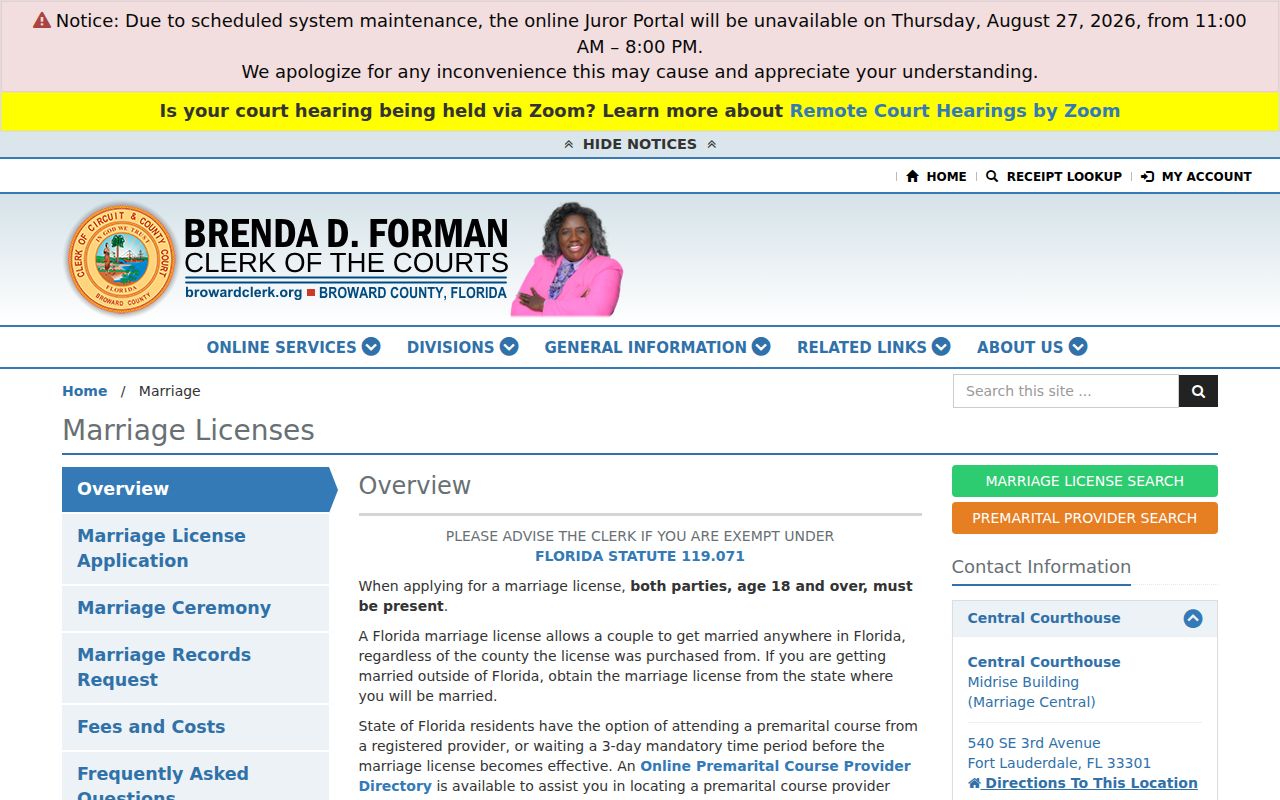
Use that record to test a family link, not to infer residence at a parcel.
Weston Records Before Broward
Broward County was created in 1915 from parts of Dade and Palm Beach Counties. Earlier land, probate, court, and census research must follow period jurisdiction. The future Weston tract was largely undeveloped, so land records and maps outweigh any assumed old city directory.
The Florida State Archives preserves government records and provides a catalog gateway.
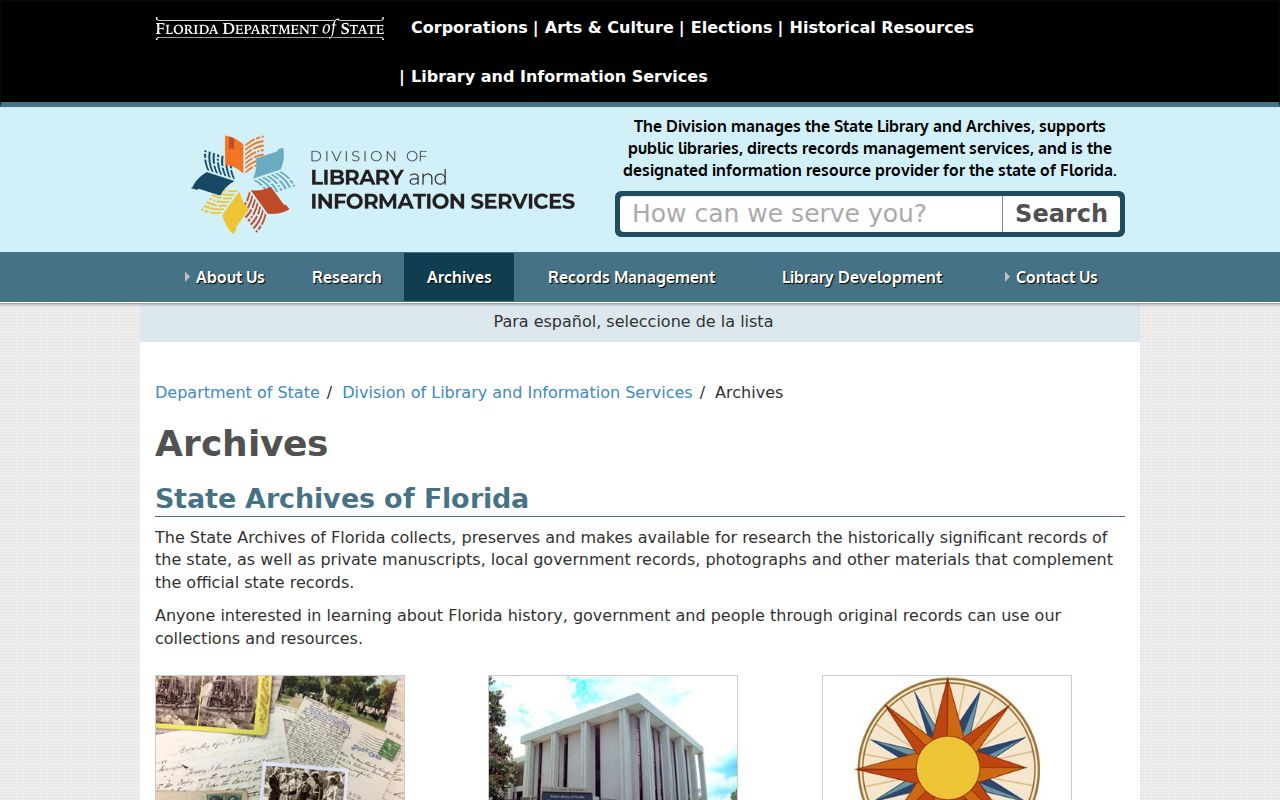
Search predecessor county names alongside Indian Trace, Bonaventure, the subdivision, and the family name.
Use Weston Previous Residents Lawfully
A past-owner chain does not list all previous residents. Renters, children, guests, and other occupants may be absent. Protected addresses, sealed cases, private contact lists, and restricted vital data remain closed. Florida death certificates without cause are public, while cause remains restricted for 50 years.
The Florida death-certificate channel gives current order and eligibility rules.
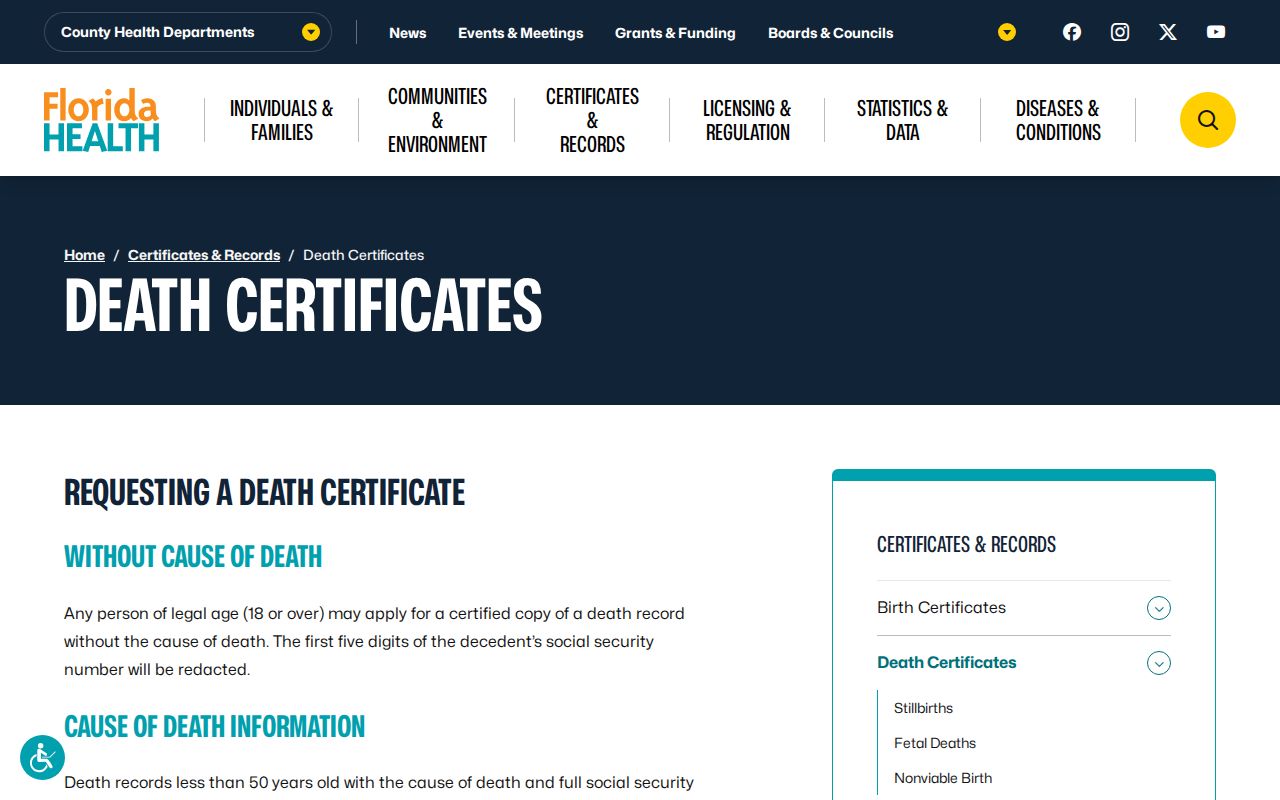
A certificate can confirm a date or link only when the requester qualifies for the version sought.
Lawful use. Research past residents for house history, genealogy, estate matters, or personal curiosity. Never use records to track, harass, or harm a living person.